
COEUR d’ALENE – Stephen Pyne had his baptism of fire early. A few days after graduating from high school as an 18-year-old he joined a forest fire crew at the North Rim of the Grand Canyon. He returned to work with the crew for the next 15 fire seasons.
Pyne says this experience has influenced his writing for the rest of his life.
Text Box: Stephen PyneThe Coeur d’Alene Public Library will host Pyne, author of “The Year of the Fires: The Story of the Great Fires of 1910,” Wednesday, Aug. 18, at 7 p.m. in the Community Room. He is in North Idaho for presentations commemorating the 100th anniversary of the fires.
Pyne did his undergraduate work at Stanford University and graduate school at the University of Texas at Austin. He has been at Arizona State University since 1985 – 10 years at ASU West, three in the History Department at the Tempe, and he has since been in the School of Life Sciences.
His writing includes a biography of G.K. Gilbert, a geologist and explorer in the region; books about wildland fire, its history and management; then about the Grand Canyon and comparable Earth features. The stories of exploration now include not only the Canyon but Antarctica and the planets. The survey of fire now includes all the continents, at least in parts, with separate histories for the U.S., Canada, Australia, and Europe including Russia.
His interest in writing has even led to a book about nonfiction writing.
His current projects continue to elaborate on these topics: a book on the Voyager mission to the outer planets; a fire history of America since 1960; a multi-authored replacement for “Introduction to Wildland Fire;” and a fire history of Mexico. He has also been co-writing with his daughter, Lydia V. Pyne, a book-length interpretive essay on the Pleistocene epoch, that they are calling “The Last Lost World.”
Pyne’s Coeur d’Alene program is free to the public and is funded in part by the Friends of the Library who will also provide refreshments.
Anyone who needs accommodation to participate in a library program is asked to contact the staff prior to the activity by calling 208/769-2315. More news and information about the library is available online at cdalibrary.org. News about the library and other city departments is also available on the City of Coeur d’Alene news blog: cdacity.blogspot.com.
Showing posts with label idaho. Show all posts
Showing posts with label idaho. Show all posts
Friday, August 13, 2010


Wednesday, August 11, 2010
Thunderboats Returning to Coeur d'Alene
This has been posted in cooperation with the Museum of North Idaho.
The Thunderboats are returning to Coeur d'Alene in the First Annual Diamond Cup Regatta. The event celebrates the Diamond Cup Unlimited Hydroplane Races that were held on Lake Coeur d'Alene from 1958 to 1968 and benefits the Museum of North Idaho's building fund.
The public will have an opportunity to enter a raffle for a chance to ride in historic hydroplanes. Tickets are available for $10 each at Museum of North Idaho, Coeur d'Alene Chamber, Yacht Club, Interstate Office Supply, RDI Heating, Coeur d'Alene Eagles, Jiff-EE Mart on Lincoln Way, Lake City Ford, Tom Addis Dodge, Lyle's Fabric, Allsport Polaris at Liberty Lake, Appleway Quick Lube and Car Wash, Coeur d'Alene Tractor, Priano's Billiards & Backyards and Kootenai Lawn & Garden. The drawing will be held Saturday night Aug. 21 at the Diamond Cup Regatta Banquet.
The Regatta will be August 20 through the 22nd with the cooperation of the Hydroplane and Race Boat Museum in Kent, Washington. Four vintage unlimited hydroplanes will be displayed around the community and at the Museum of North Idaho. Tentatively scheduled to appear are the 1968 Miss Budweiser, the 1967 Miss Budweiser, the "Green Dragon" Miss Bardahl and the Miss Wahoo. Each of these boats competed in Diamond Cup racing including racing under different owner/sponsor teams. These boats were state of the art 40-50 years ago. They are powered by WWII fighter plane V-12 engines and capable of running at speeds in the 190 mph range.
Friday August 20 beginning at 4 pm, at least two of these boats will be displayed in front of The Coeur d'Alene with a no-host bar. Crewmembers will be available to discuss the boats and their rich history. One of the massive V-12's will be fired up, providing a sound like no other.
Saturday evening August 21 the Diamond Cup Regatta Banquet featuring Mira "The Flying Czech" Slovak, driving Harrah's Tahoe Miss won the 1966 Diamond Cup. Mira is also famous for crashing the Miss Exide during the 1963 Diamond Cup. The evening will also include Diamond Cup vintage films not previously seen in public and silent and live auctions of items including hydroplane ride-alongs.
Sunday morning August 22 8 am is the shot gun start of the Diamond Cup Golf Tournament at the world famous Coeur d'Alene Resort Golf Course. Entry fee of $250 includes water taxi ride from the Hotel, golf cart, fore caddy, unlimited floating practice balls, a pregame massage, golf club and bag cleaning, a signature name tag for your bag and 18 holes of unprecedented golf.
Saturday night at the banquet the winners of the Vintage hydroplanes ride-alongs will be announced. Rides will go from noon to 6 pm on Sunday August 22, weather permitting. Viewing of the 1.5-mile course is free from many vantage points on the northwest end of the lake.
The event is sponsored by RDI Heating & Cooling, HG Henry-Griffitts, Gropp Electric, The Coeur d'Alene, Coeur d'Alene Inn, Centennial Distributing, Hagadone Marine Group, Allsport Polaris, Kootenai Lawn and Garden. Proceeds from the sale of souvenir shirts, raffle tickets, banquet tickets, auction items, golf tournament entries, donations and hydroplane rides benefit the Museum of North Idaho's building fund. Contact the Museum of North Idaho for a registration form for the events or go to www.museumni.org or www.diamondcup.org.
Schedule
Friday Aug. 20 at 4 pm No-host bar on the front lawn of The Coeur d'Alene
Saturday Aug. 21 Banquet at The Coeur d'Alene.
6-7 pm No-host social hour at the Coeur d'Alene Convention Center
7-8:30 pm Banquet $100. Tables of eight are available. Guest speaker Mira Slovak.
8:30 pm Live auction for hydro rides and items to be announced
Sunday Aug. 22 8 am Diamond Cup Gold Tournament at Coeur d'Alene Resort Golf Course.
Sunday 12-6 pm Vintage Hydroplane rides. Tickets only available through live auction Saturday night and by raffle drawings.
For more info: www.diamondcup.org
Doug Miller 208-691-1612 dmiller@naabelle.com
Dave Walker 208-277-8808 dwcdaid@yahoo.com
Dorothy Dahlgren 208-664-3448 or email dd@museumni.org
The Thunderboats are returning to Coeur d'Alene in the First Annual Diamond Cup Regatta. The event celebrates the Diamond Cup Unlimited Hydroplane Races that were held on Lake Coeur d'Alene from 1958 to 1968 and benefits the Museum of North Idaho's building fund.
The public will have an opportunity to enter a raffle for a chance to ride in historic hydroplanes. Tickets are available for $10 each at Museum of North Idaho, Coeur d'Alene Chamber, Yacht Club, Interstate Office Supply, RDI Heating, Coeur d'Alene Eagles, Jiff-EE Mart on Lincoln Way, Lake City Ford, Tom Addis Dodge, Lyle's Fabric, Allsport Polaris at Liberty Lake, Appleway Quick Lube and Car Wash, Coeur d'Alene Tractor, Priano's Billiards & Backyards and Kootenai Lawn & Garden. The drawing will be held Saturday night Aug. 21 at the Diamond Cup Regatta Banquet.
The Regatta will be August 20 through the 22nd with the cooperation of the Hydroplane and Race Boat Museum in Kent, Washington. Four vintage unlimited hydroplanes will be displayed around the community and at the Museum of North Idaho. Tentatively scheduled to appear are the 1968 Miss Budweiser, the 1967 Miss Budweiser, the "Green Dragon" Miss Bardahl and the Miss Wahoo. Each of these boats competed in Diamond Cup racing including racing under different owner/sponsor teams. These boats were state of the art 40-50 years ago. They are powered by WWII fighter plane V-12 engines and capable of running at speeds in the 190 mph range.
Friday August 20 beginning at 4 pm, at least two of these boats will be displayed in front of The Coeur d'Alene with a no-host bar. Crewmembers will be available to discuss the boats and their rich history. One of the massive V-12's will be fired up, providing a sound like no other.
Saturday evening August 21 the Diamond Cup Regatta Banquet featuring Mira "The Flying Czech" Slovak, driving Harrah's Tahoe Miss won the 1966 Diamond Cup. Mira is also famous for crashing the Miss Exide during the 1963 Diamond Cup. The evening will also include Diamond Cup vintage films not previously seen in public and silent and live auctions of items including hydroplane ride-alongs.
Sunday morning August 22 8 am is the shot gun start of the Diamond Cup Golf Tournament at the world famous Coeur d'Alene Resort Golf Course. Entry fee of $250 includes water taxi ride from the Hotel, golf cart, fore caddy, unlimited floating practice balls, a pregame massage, golf club and bag cleaning, a signature name tag for your bag and 18 holes of unprecedented golf.
Saturday night at the banquet the winners of the Vintage hydroplanes ride-alongs will be announced. Rides will go from noon to 6 pm on Sunday August 22, weather permitting. Viewing of the 1.5-mile course is free from many vantage points on the northwest end of the lake.
The event is sponsored by RDI Heating & Cooling, HG Henry-Griffitts, Gropp Electric, The Coeur d'Alene, Coeur d'Alene Inn, Centennial Distributing, Hagadone Marine Group, Allsport Polaris, Kootenai Lawn and Garden. Proceeds from the sale of souvenir shirts, raffle tickets, banquet tickets, auction items, golf tournament entries, donations and hydroplane rides benefit the Museum of North Idaho's building fund. Contact the Museum of North Idaho for a registration form for the events or go to www.museumni.org or www.diamondcup.org.
Schedule
Friday Aug. 20 at 4 pm No-host bar on the front lawn of The Coeur d'Alene
Saturday Aug. 21 Banquet at The Coeur d'Alene.
6-7 pm No-host social hour at the Coeur d'Alene Convention Center
7-8:30 pm Banquet $100. Tables of eight are available. Guest speaker Mira Slovak.
8:30 pm Live auction for hydro rides and items to be announced
Sunday Aug. 22 8 am Diamond Cup Gold Tournament at Coeur d'Alene Resort Golf Course.
Sunday 12-6 pm Vintage Hydroplane rides. Tickets only available through live auction Saturday night and by raffle drawings.
For more info: www.diamondcup.org
Doug Miller 208-691-1612 dmiller@naabelle.com
Dave Walker 208-277-8808 dwcdaid@yahoo.com
Dorothy Dahlgren 208-664-3448 or email dd@museumni.org
Wednesday, April 28, 2010
North Idaho Parks, Part 2
Besides State Parks, there are a number of excellent parks in the cities of North Idaho. This series will cover a variety of parks in the area and this week we'll look at Coeur d'Alene's City Park.
Located on the north shore of Lake Coeur d'Alene and just a block from downtown, the Coeur d'Alene City Park is one of the most popular parks in North Idaho. How the park came about is another interesting piece of local history.
Much of the land now considered City Park, North Idaho College and the Fort Grounds residential neighborhood were in the boundaries of Fort Coeur d'Alene, later know as Fort Sherman. The fort was active from 1878 to 1898 and the town and later City of Coeur d'Alene built around it. By the turn of the century the fort was decommissioned and officially closed on March 9, 1900. Not long after that the land was auctioned off to the public.
One of the biggest local investors was wealthy lumberman Frederick Blackwell who came here in 1901. Blackwell and his partners built the Coeur d'Alene and Spokane Electric Railroad and started hourly trolley service between the cities in 1903. Like all good railroads, they built and promoted attractions to put passengers on the trains. By 1905 Blackwell Park had become 20 plus landscaped acres with walkways, fountains, flowers and over 250 different varieties of shade trees and was one of the most popular destinations of the Inland Northwest. A dance pavilion hosted a band five nights a week, and there was a baseball diamond, bath house and grandstand within the park. In 1909 a fatal head-on train wreck brought financial ruin and the rail line was sold to the Great Northern and the park to the City of Coeur d'Alene.
In 1937 a Civic Center was built to replace the pavilion and was touted as one of the largest log structures in the Pacific Northwest. Between bleachers and floor seating, the building could house 2,500 people. In 1942, after the construction of Farragut Naval Training Center, the building became a USO where thousands of sailors relaxed and were entertained. In 1945 it was set afire by a disgruntled (drunk?) sailor and burnt to the ground.
In 1942 Playland Pier opened on what is now known as Independence Point. For 33 years the amusement park and rides were a bonus to those visiting the Park or swimming at the beach. It burned in 1975.

Now, City Park is just as popular as ever. At 17 acres it offers families a wonderful place to spend the day. Fort Sherman Playground is a large, fenced area for smaller kids in the Park. Free concerts are held in the bandshell on summer Sundays. The basketball court was recently voted best outdoor court in the area by the readers of the Inlander. There are picnic tables throughout the Park, a shelter can be reserved by small groups, shade trees make for a cool summer day and the City Beach is considered part of the Park. The Park is a favorite spot to watch the 4th of July fireworks and is home of the Taste of the Coeur d'Alene in late July. City Park is also home of Ironman Village the end of June as the start and transition area for the annual Ironman Coeur d'Alene.

Pack a lunch, bring the kids and spend a day at Coeur d'Alene City Park.
Located on the north shore of Lake Coeur d'Alene and just a block from downtown, the Coeur d'Alene City Park is one of the most popular parks in North Idaho. How the park came about is another interesting piece of local history.
Much of the land now considered City Park, North Idaho College and the Fort Grounds residential neighborhood were in the boundaries of Fort Coeur d'Alene, later know as Fort Sherman. The fort was active from 1878 to 1898 and the town and later City of Coeur d'Alene built around it. By the turn of the century the fort was decommissioned and officially closed on March 9, 1900. Not long after that the land was auctioned off to the public.
One of the biggest local investors was wealthy lumberman Frederick Blackwell who came here in 1901. Blackwell and his partners built the Coeur d'Alene and Spokane Electric Railroad and started hourly trolley service between the cities in 1903. Like all good railroads, they built and promoted attractions to put passengers on the trains. By 1905 Blackwell Park had become 20 plus landscaped acres with walkways, fountains, flowers and over 250 different varieties of shade trees and was one of the most popular destinations of the Inland Northwest. A dance pavilion hosted a band five nights a week, and there was a baseball diamond, bath house and grandstand within the park. In 1909 a fatal head-on train wreck brought financial ruin and the rail line was sold to the Great Northern and the park to the City of Coeur d'Alene.
In 1937 a Civic Center was built to replace the pavilion and was touted as one of the largest log structures in the Pacific Northwest. Between bleachers and floor seating, the building could house 2,500 people. In 1942, after the construction of Farragut Naval Training Center, the building became a USO where thousands of sailors relaxed and were entertained. In 1945 it was set afire by a disgruntled (drunk?) sailor and burnt to the ground.
In 1942 Playland Pier opened on what is now known as Independence Point. For 33 years the amusement park and rides were a bonus to those visiting the Park or swimming at the beach. It burned in 1975.

Now, City Park is just as popular as ever. At 17 acres it offers families a wonderful place to spend the day. Fort Sherman Playground is a large, fenced area for smaller kids in the Park. Free concerts are held in the bandshell on summer Sundays. The basketball court was recently voted best outdoor court in the area by the readers of the Inlander. There are picnic tables throughout the Park, a shelter can be reserved by small groups, shade trees make for a cool summer day and the City Beach is considered part of the Park. The Park is a favorite spot to watch the 4th of July fireworks and is home of the Taste of the Coeur d'Alene in late July. City Park is also home of Ironman Village the end of June as the start and transition area for the annual Ironman Coeur d'Alene.

Pack a lunch, bring the kids and spend a day at Coeur d'Alene City Park.
Thursday, April 15, 2010
Devil Worshipers? Hook Man?
Well, it's time for another in the series of weird legends and urban myths around North idaho. Before the Aryan Nation (all 6 of them) moved here, there were stories about another strange bunch of people roaming the hills and prairies around Kootenai County. Devil worshipers and Hook Man.
Like all good legends, almost everyone knew somebody who (supposedly) knew first hand of strange doings but nobody ever saw anything that could be backed with fact or photo. But it still made a great spooky story in the days before movies like Halloween and Friday the 13th.
Some of the tales of devil worshipers involved human and/or animal satanic ritual sacrifice. People disappeared (well, there was some truth to that one) and dogs were found drained of blood. Then there were chains of hooded people across isolated roads to stop cars so they could pull the passengers out and..., well, they were going to do something with them.
And Hook Man, well it was said he could show up anywhere, anytime, but mostly in the dark of night and usually when a romantic couple was parked in some back woods make-out spot. He was old, evil, disfigured and, of course, had a hook for a hand. The hook was a result of a logging/mining/hunting accident, depending on who was telling the story. But he was out there and he was demented and a vengeful killer.
Perhaps the stories were in response to or balanced out the Blue Army that had come to Kootenai County. Maybe there just wasn't enough creepy stuff in the area and people always need a good one for the campfire or to tell an impressionable young lady ("snuggle up, baby, I'll protect you"). Some say the stories were told in hopes of keeping folks from moving here. Whatever the reason, they certainly got people's attention and were passed around like a box of Cracker Jacks. But unlike the snack, these stories always got bigger.
Turns out almost every small town across America had a tale similar to Hook Man. Where do you think they came up with the ideas for those movies? A little creepiness goes a long way.
Many of the devil worshiper stories took place near Rathdrum. Perhaps it was because in 1972 a mutilated cow was found on a local ranch. That one has never been solved.
Now there was a real disappearance that everyone associated the devil worshipers with. A Rathdrum couple named Ron and Rita Marcussen disappeared in late 1973 and it was assumed they had fallen victims of the devil's disciples. When their remains were finally discovered it turned out it was just your run of the mill murder (if there is such a thing).

You may want to save this story for the campfire.
Like all good legends, almost everyone knew somebody who (supposedly) knew first hand of strange doings but nobody ever saw anything that could be backed with fact or photo. But it still made a great spooky story in the days before movies like Halloween and Friday the 13th.
Some of the tales of devil worshipers involved human and/or animal satanic ritual sacrifice. People disappeared (well, there was some truth to that one) and dogs were found drained of blood. Then there were chains of hooded people across isolated roads to stop cars so they could pull the passengers out and..., well, they were going to do something with them.
And Hook Man, well it was said he could show up anywhere, anytime, but mostly in the dark of night and usually when a romantic couple was parked in some back woods make-out spot. He was old, evil, disfigured and, of course, had a hook for a hand. The hook was a result of a logging/mining/hunting accident, depending on who was telling the story. But he was out there and he was demented and a vengeful killer.
Perhaps the stories were in response to or balanced out the Blue Army that had come to Kootenai County. Maybe there just wasn't enough creepy stuff in the area and people always need a good one for the campfire or to tell an impressionable young lady ("snuggle up, baby, I'll protect you"). Some say the stories were told in hopes of keeping folks from moving here. Whatever the reason, they certainly got people's attention and were passed around like a box of Cracker Jacks. But unlike the snack, these stories always got bigger.
Turns out almost every small town across America had a tale similar to Hook Man. Where do you think they came up with the ideas for those movies? A little creepiness goes a long way.
Many of the devil worshiper stories took place near Rathdrum. Perhaps it was because in 1972 a mutilated cow was found on a local ranch. That one has never been solved.
Now there was a real disappearance that everyone associated the devil worshipers with. A Rathdrum couple named Ron and Rita Marcussen disappeared in late 1973 and it was assumed they had fallen victims of the devil's disciples. When their remains were finally discovered it turned out it was just your run of the mill murder (if there is such a thing).

You may want to save this story for the campfire.
Tuesday, April 13, 2010
The Empty Building at 5th & Lakeside
A large building sits empty at the SW corner of 5th and Lakeside in downtown Coeur d'Alene. Perhaps you have walked by and wondered what it was, and why you can see through the building.
This was originally the Lodge for the Benevolent and Protective Order of the Elks, Club 1254. It was a grand lodge that featured a beautiful ballroom with a stage. Besides Elks functions, there were a variety of community events. Locals growing up in Coeur d'Alene in the 50's and 60's remember things like kid's magic shows and Christmas pageants in that ballroom.
Between property taxes and a (nationwide) drop in fraternal organization membership, the Elks Club remodeled the building in the late 1970's and turned the majority of space into The 1254 Athletic Club and leaving just a couple meeting rooms and the bar as the Elks Club proper.
The 1254 Athletic Club had 3 racquetball courts, a workout room, therapy spa tub and steam room. It had a decent membership into the early 1980's when the Elks built a new facility on Prairie Avenue. Then the building was emptied.
Over the following years the building was slowly gutted. A few weak efforts to rejuvenate the building fell through, leaving it as it is today. You can look in the front windows and see out the back.
The building's shell is still a beautiful structure but the amount of money that it would take to bring it back to life is probably more than it is worth. City codes also require new buildings in the downtown area must provide parking or pay an offsetting fee, making a rebirth even more expensive.
It's a darn shame this old building has sat empty for so long. It takes up a quarter of a block and has become a bit of an eyesore as it sits and rots. Maybe it will end up like the Wilma Theatre, left to sit for so many years it just implodes, ending up as another small pocket park such as the ones at 2nd and Sherman (The Wilma) and between 3rd and 4th on Sherman (Woolworth's).
It's worth noting that Sandpoint didn't let their old theatre, The Panida, fade away. The Panida has turned into a popular venue for live entertainment, concerts and special movie presentations.
This was originally the Lodge for the Benevolent and Protective Order of the Elks, Club 1254. It was a grand lodge that featured a beautiful ballroom with a stage. Besides Elks functions, there were a variety of community events. Locals growing up in Coeur d'Alene in the 50's and 60's remember things like kid's magic shows and Christmas pageants in that ballroom.
Between property taxes and a (nationwide) drop in fraternal organization membership, the Elks Club remodeled the building in the late 1970's and turned the majority of space into The 1254 Athletic Club and leaving just a couple meeting rooms and the bar as the Elks Club proper.
The 1254 Athletic Club had 3 racquetball courts, a workout room, therapy spa tub and steam room. It had a decent membership into the early 1980's when the Elks built a new facility on Prairie Avenue. Then the building was emptied.
Over the following years the building was slowly gutted. A few weak efforts to rejuvenate the building fell through, leaving it as it is today. You can look in the front windows and see out the back.
The building's shell is still a beautiful structure but the amount of money that it would take to bring it back to life is probably more than it is worth. City codes also require new buildings in the downtown area must provide parking or pay an offsetting fee, making a rebirth even more expensive.
It's a darn shame this old building has sat empty for so long. It takes up a quarter of a block and has become a bit of an eyesore as it sits and rots. Maybe it will end up like the Wilma Theatre, left to sit for so many years it just implodes, ending up as another small pocket park such as the ones at 2nd and Sherman (The Wilma) and between 3rd and 4th on Sherman (Woolworth's).
It's worth noting that Sandpoint didn't let their old theatre, The Panida, fade away. The Panida has turned into a popular venue for live entertainment, concerts and special movie presentations.
Wednesday, April 7, 2010
This Day in History, April 7
On this day in 1963, Harley Hudson passed away. Harley didn't build any railroads, captain any steamboats, mine any gold or run any sawmill. But what he did do has had just as long lasting affect on Coeur d'Alene as any of those who did.

Harley opened a little shack near the shores of Lake Coeur d'Alene selling hamburgers in 1907. It was known as the Missouri Kitchen until around 1960 when Hudson Hamburgers became the name synonymous with burgers in Coeur d'Alene. Just like today, Harley served up hamburgers to locals and tourists alike. When he opened (very near where Hudson's is today), Coeur d'Alene was even then a tourist mecca. People rode the electric line into Coeur d'Alene to board steamboats that would take them down the lake and up the St. Joe River to the Cataldo Mission, St. Maries and St. Joe City.

The above photo shows the south side of the 200 block of Sherman Ave. in 1954. Yes, that's a Hudson Automobile dealership (was the Buick a used car?) and Texaco gas station, located roughly where Tito Macoroni's is today. But farther back you'll see the Missouri Lunch sign. That location sported a U-shaped counter where the 2nd generation of Hudsons flipped burgers.
Of course today the 4th generation, Steve and Todd, are still serving up old school hamburgers on a grill that is over 50 years old itself. Hudson's has been featured in numerous publications, both locally and nationally with appearances in the New York Times and Sunset Magazine among others.
Hudson's never became McDonald's (thank goodness!) but has certainly left a major mark in Coeur d'Alene. Here's a tip of the hat to you, Harley, for starting something that is as unique to and loved by Coeur d'Alene as Tubbs Hill and City Beach.

Harley opened a little shack near the shores of Lake Coeur d'Alene selling hamburgers in 1907. It was known as the Missouri Kitchen until around 1960 when Hudson Hamburgers became the name synonymous with burgers in Coeur d'Alene. Just like today, Harley served up hamburgers to locals and tourists alike. When he opened (very near where Hudson's is today), Coeur d'Alene was even then a tourist mecca. People rode the electric line into Coeur d'Alene to board steamboats that would take them down the lake and up the St. Joe River to the Cataldo Mission, St. Maries and St. Joe City.

The above photo shows the south side of the 200 block of Sherman Ave. in 1954. Yes, that's a Hudson Automobile dealership (was the Buick a used car?) and Texaco gas station, located roughly where Tito Macoroni's is today. But farther back you'll see the Missouri Lunch sign. That location sported a U-shaped counter where the 2nd generation of Hudsons flipped burgers.
Of course today the 4th generation, Steve and Todd, are still serving up old school hamburgers on a grill that is over 50 years old itself. Hudson's has been featured in numerous publications, both locally and nationally with appearances in the New York Times and Sunset Magazine among others.
Hudson's never became McDonald's (thank goodness!) but has certainly left a major mark in Coeur d'Alene. Here's a tip of the hat to you, Harley, for starting something that is as unique to and loved by Coeur d'Alene as Tubbs Hill and City Beach.
Wednesday, March 24, 2010
Idaho State Fossil?
Idaho has an official State Fossil? Yes, it's true. Idaho has declared a number of official items. Sure you knew the State Bird is the Mountain Bluebird and the State flower is the Syringa, but did you know Idaho also has a State Insect, Raptor, Dance, Soil and even Fossil.
The 1988 legislature designated the Hagerman Horse as the Official State Fossil. Discovered in 1928, it was originally described as Plesippus shoshonensis. The Hagerman Horse is the oldest known representative of the modern horse genus Equus (includes horses, donkeys, and zebras) and is believed to be more closely related to the living Grevy's zebra in Africa.


Just so you won't get caught not knowing this information, here's the official list for the State of Idaho.
State flower is the Syringa
State bird is the Mountain Bluebird
State tree is the Western White Pine.
State fruit is the Huckleberry
State vegetable is the Potato
State horse is the Appaloosa
State fish is the Cutthroat Trout
State insect is the Monarch Butterfly
State gem is the Star Garnet
State fossil is the Hagerman Horse
State raptor is the Peregrine Falcon
State dance is the Square Dance
State soil is Threebear
Perhaps we should also have an official State Pie, Huckleberry of course.
(Just so you'll know, Threebear consists of moderately well drained soils formed in silty sediments with a thick mantle of volcanic ash.)
Friday, March 19, 2010
Born in the Iron Horse Parking Lot
Seriously. There are lots of people who where born in the Iron Horse Parking lot at 4th & Lakeside in Coeur d'Alene. Of course it wasn't a parking lot then, it was Lake City General Hospital.
Lake City General was a three story building with 36 beds and was at one time was considered on the cutting edge of medicine. It wasn't unusual to have North Idaho's inured loggers sent there for treatment. And countless babies were born at Lake City General.
Lake City was closed November 1966 when Kootenai Memorial Hospital (Kootenai medical Center, Kootenai Health) was opened at the I-90 and Hwy 95 junction. And that's why there was an era when every kid in Coeur d'Alene who had a bicycle knew where Hospital Hills were. But that's anther story for another blog.
After it ceased being a hospital a man named Francis Schuckhardt acquired the use of, and perhaps ownership of, the LCGH building. Schuckhardt had risen to a top administrative position with the Blue Army a mainstream Catholic Marian organization but was dismissed in 1966 for condemning a Vatican Council. The following year he founded a militarily traditionalist community in Coeur d'Alene called the Fatima Crusade which was housed in the old hospital. Later the name was changed to the Tridentine Latin Rite Church.
Locals still referred to the group as the Blue Army due to the blue habits the nuns wore. And there a lot of them. They traveled around in big white vans full of praying nuns. A local inside joke was they were praying they wouldn't get in a wreck because it looked like even the driver was praying instead of driving.
Followers of Schuckhardt came to the area and started a community, The City of Mary, near Rathdrum. By the mid 1970's the whole operation was moved to Mount St. Michael's outside of Spokane.
The hospital then became the home of a new company called Action Printers. As it grew, Action Printers moved out and the building was acquired by Tom Robb of the Iron Horse, leveled and turned into the current parking lot.
So next time you hear someone say "I was born in the Iron Horse parking lot" you better believe them.
Lake City General was a three story building with 36 beds and was at one time was considered on the cutting edge of medicine. It wasn't unusual to have North Idaho's inured loggers sent there for treatment. And countless babies were born at Lake City General.
Lake City was closed November 1966 when Kootenai Memorial Hospital (Kootenai medical Center, Kootenai Health) was opened at the I-90 and Hwy 95 junction. And that's why there was an era when every kid in Coeur d'Alene who had a bicycle knew where Hospital Hills were. But that's anther story for another blog.
After it ceased being a hospital a man named Francis Schuckhardt acquired the use of, and perhaps ownership of, the LCGH building. Schuckhardt had risen to a top administrative position with the Blue Army a mainstream Catholic Marian organization but was dismissed in 1966 for condemning a Vatican Council. The following year he founded a militarily traditionalist community in Coeur d'Alene called the Fatima Crusade which was housed in the old hospital. Later the name was changed to the Tridentine Latin Rite Church.
Locals still referred to the group as the Blue Army due to the blue habits the nuns wore. And there a lot of them. They traveled around in big white vans full of praying nuns. A local inside joke was they were praying they wouldn't get in a wreck because it looked like even the driver was praying instead of driving.
Followers of Schuckhardt came to the area and started a community, The City of Mary, near Rathdrum. By the mid 1970's the whole operation was moved to Mount St. Michael's outside of Spokane.
The hospital then became the home of a new company called Action Printers. As it grew, Action Printers moved out and the building was acquired by Tom Robb of the Iron Horse, leveled and turned into the current parking lot.
So next time you hear someone say "I was born in the Iron Horse parking lot" you better believe them.
Tuesday, March 9, 2010
This Day in History, March 9
1900 Fort Sherman officially terminated
Established in 1878 at Camp Coeur d'Alene, on March 9, 1900, Fort Sherman was officially closed. Fort Coeur d'Alene was never much of a military presence but more of an outpost. By the time it was built "indian problems" had ended with the defeat of Chief Joseph and the Nez Perce in 1877.

While General William Tecumseh Sherman certainly picked a picturesque location, high spring waters occasionally flooded the fort, the worst in 1894. The surrounding area grew into a town and the lakes and rivers became trade routes and tourist destinations. Nice place, but not for a military fort.
Friday, March 5, 2010
The Great Seal of the State of Idaho, Part 2
March 5, 1891, Emma Edwards Green was handed the honorarium by Governor Norman B. Willey for designing the Great Seal of the State of Idaho.

Idaho became a state on July 3, 1890 and that summer a young woman came to Boise to visit relatives. Emma Sarah Etine Edwards, who was the daughter of John C. Edwards, a former Governor of Missouri (1844-48).
Emma, the oldest of eight children, was well educated for a woman of that time. She stopped in Boise on her way home from New York where she had spent a year at art school. She was intending on a short stay but fell in love with the area and stayed. Emma went on to start art classes where she taught locals to paint.
She was invited to enter a design for the Great Seal of the State of Idaho. The First Legislature passed Concurrent Resolution No. 1 which offered a prize of one hundred dollars for the best design submitted.
Artists from all over the country entered, but the unanimous winner was Emma Edwards, who became the first and only woman to design a Great Seal of a State. Later she married miner James G. Green. Emma died in Boise on January 6, 1942.


Thursday, March 4, 2010
This Day in Idaho History, March 4, 1863, Idaho Territory
On March 4, 1863, President Abraham Lincoln signed an act creating Idaho Territory from portions of Washington and Dakota Territories and placed the capital at Lewiston. The original Idaho Territory included most of the areas that later became the states of Idaho, Montana and Wyoming with a population of less than 17,000. In 1868, Idaho Territory took the size and shape of what would become the State Of Idaho which was admitted to the Union in 1890.
A big chunk of the Pacific Northwest was known as Washington and Oregon Territories in 1853. In 1859 Oregon was made a state and Washington Territory was expanded.

In the early 1860's gold was being discovered in what we now know as the Sawtooth Mountains of Idaho and Montana. With more claims made, towns founded and people migrating to the area, it was determined that trying to govern the area from the Territorial Capitol of Olympia was impossible, there needed to be a more local seat and Idaho Territory was created with the capitol in Lewiston. Lewiston being a major trade center and supply head for much of the mining efforts.
A big chunk of the Pacific Northwest was known as Washington and Oregon Territories in 1853. In 1859 Oregon was made a state and Washington Territory was expanded.
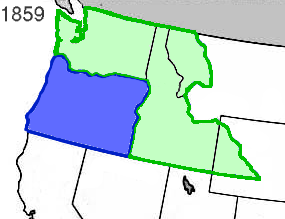
In the early 1860's gold was being discovered in what we now know as the Sawtooth Mountains of Idaho and Montana. With more claims made, towns founded and people migrating to the area, it was determined that trying to govern the area from the Territorial Capitol of Olympia was impossible, there needed to be a more local seat and Idaho Territory was created with the capitol in Lewiston. Lewiston being a major trade center and supply head for much of the mining efforts.
When Idaho Territory was created by act of congress, March 3, it covered 326,373 square miles between the 104th and 117th meridian, and the 42nd and the 49th parallels of latitude. It extended to within fifty miles of the Missouri River below the mouth of the Yellowstone River, and included the Milk, White Earth, Big Horn and Powder Rivers. Within Idaho Territory were the Black Hills, Fort Laramie, Long's Peak, the South Pass, Green River, Fort Hall, Fort Boise and the trail routes of settlers going to the Pacific coast along Snake River. Idaho Territory also included all of what is now Montana and a large portion of what became Wyoming.
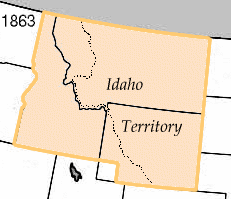
The Idaho Territorial lines, according to the act of March 3, 1863, were defined as:
Beginning at a point in the middle of the channel of the Snake River where the northern boundary of Oregon intersects the same, thence following down said channel of the Snake River to a point opposite the mouth of the Kooskooskia or Clearwater River, thence due north to the forty-ninth parallel of latitude, thence east along said parallel to the twenty-seventh degree of longitude west of Washington, thence south along said degree of longitude to the northern boundary of Colorado territory, thence west along said boundary to the thirty-third degree of longitude west of Washington, thence north along said degree of longitude to the forty-second parallel of latitude, thence west along said parallel to the eastern boundary of the state of Oregon, thence north along said boundary to the place of beginning.
Keep checking in as we continue to post more history, information and points of interest in North Idaho. On July 3 we'll mark 120 years since statehood.
Wednesday, March 3, 2010
This Day in North Idaho History, March 3, 1934
March 3, 1934, second version of the Long Bridge connecting Sandpoint and Sagle is dedicated.

The first bridge to span Lake Pend Oreille was built in 1908 and lasted 25 years. The next bridge construction was a project of the WPA, Works Project Administration at a cost of $160,000. The bridge was just short of 2 miles and was known for years as the world's longest wooden bridge.
Construction wasn't without problems. Five thousand pounds of steel to be used for girders was dropped into 20 feet of water at Dover when the boom being used to load it onto a barge broke.
The fourth and current bridge was completed in 1981. The third bridge is next to the main one and is now used by walkers, runners and bicyclists.
The Long Bridge is also the site of the Long Bridge Swim the first Saturday in August.
The Long Bridge is also the site of the Long Bridge Swim the first Saturday in August.
Monday, March 1, 2010
This Day in Idaho History, Feb 27-28
Snowslides at Mace and Burke kill over 20 and destroy Carbondale Hill Mining Co
February 27-28, 1910
The Mace slide from Custer Peak hit at 10:35pm and went through the town and up the opposite slope. The canyon was filled with 45 feet of snow. A construction train was tossed from the track into a ravine and those on board had to dig their way out. By shear luck, the slide missed the Standard Mine boarding house, where 300 miners were sleeping, by 120 feet.
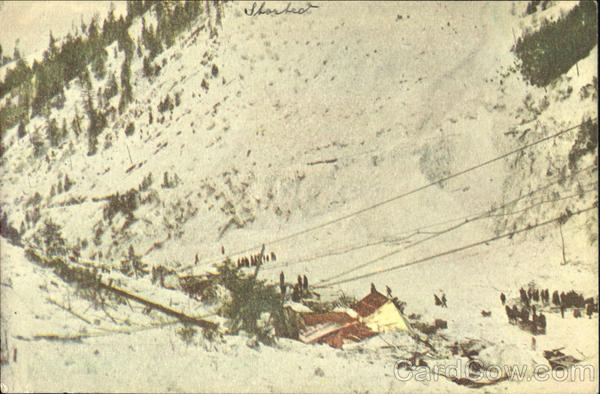
Old timers in the region had been warning of slides due to the record snows and recent Chinook winds and rain. When word of the Mace slide got to Burke it caused a near evacuation of Burke, most likely saving many lives when a slide hit town at 5:30am.
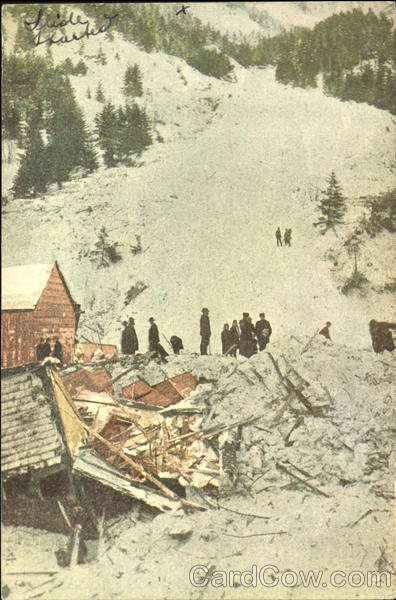
The Burke slide was 3,000 feet long and filled the canyon, burying Burke under 50 feet of snow. It took up to 8-10 hours to dig survivors out.
Thursday, February 25, 2010
The Great Seal of Idaho
There is no official record of when the first Great Seal of Idaho was adopted when Idaho was declared a territory in 1863. This is that first seal, the design credited to Silas D. Cochran, a clerk in the office of the Secretary of State.

There was dissatisfaction with this official seal and Territorial Governor Caleb Lyon presented a seal of his own design which was accepted by the Idaho Territorial Legislature on January 11, 1866. This Seal (below) was redrawn a number of times but was used until Idaho became a state in 1890.

In March, 1891, the basis for the current Great Seal of the State of Idaho was adopted and is a story in itself as it was the only State Seal that was designed by a woman. Check back here for more on the story to be continued on March 5 and March 14.
Friday, February 19, 2010
The Military Connection to North Idaho
Last night was Part 6 of the 12 part Connections to the Past history series presented by Robert Singletary at the CdA Library and focused on our military connection. Here's a few interesting bits of information.

General William T. Sherman, the Union Civil War hero and Confederate scoundrel who marched through Georgia, was on an inspedtion tour and followed the Mullan Road. Impressed with the location where the Spokane River flows out of Coeur d'Alene Lake he recommended it as a site for a fort. On April 16, 1878, a military post known as Camp Coeur d’Alene was established. The name was changed to Fort Coeur d’Alene on April 5, 1879, and finally to Fort Sherman, April 6, 1887.
The Army's 2nd Infantry Unit was the first to man Fort Coeur d'Alene and grudgingly helped build the encampment. The last regular unit to be stationed was the 16th Infantry between 1894 and 1898.
Post Civil War, soldiers quit the military and tried to resume their regular lives. The Army was hard pressed to recruit and many immigrants were accepted to build back the forces. Many soldier couldn't even speak English and, like many forts, Fort Coeur d'Alene had English classes for the troops.
The Fort CdA/Sherman hospital was one of the finest in the Inland Northwest and many military personnel were sent there for treatment. The hospital was also required to keep weather records, that's why local weather can be tracked back that far.
A town was built around the fort as non-military people were required to provide goods and services, from construction to food to local women who washed uniforms. Soldiers referred to the area we now call City Beach as Sudstown because that's where clothes were washed on rocks in the lake.
Oscar Canfield was a friend of Sherman's and got the first contract to supply beef to the fort. Visiting the ranch, Sherman asked what the name of the mountain behind them was called. Previously unnamed, Sherman declared it to be Canfield.
Other place names also originated from these times. One commanding officer was Col. William P. Carlin, another Civil War hero who led the troops in the mining revolt of 1890. He wasn't very fond of the post but did end up buying property on the east side of the lake, now known as Carlin Bay. Some of the soldiers who mustered out of the Army stayed and homesteaded the area, one was a Col. Stanley, hence Stanley Hill.
Over time, Fort Sherman was pinched in as a town had grown around it and due to the fact it was susceptible to spring flooding, it was decommissioned and troops were moved to Ft. George Wright in Spokane in April of 1901. The area was turned over to the Department of the Interior and was sold at public auction in 1905.
This history series is entertaining and enlightening, as are a number of other presentations at North Idaho libraries. To see what's coming up, visit FYI North Idaho and check the calendar of events.

General William T. Sherman, the Union Civil War hero and Confederate scoundrel who marched through Georgia, was on an inspedtion tour and followed the Mullan Road. Impressed with the location where the Spokane River flows out of Coeur d'Alene Lake he recommended it as a site for a fort. On April 16, 1878, a military post known as Camp Coeur d’Alene was established. The name was changed to Fort Coeur d’Alene on April 5, 1879, and finally to Fort Sherman, April 6, 1887.
The Army's 2nd Infantry Unit was the first to man Fort Coeur d'Alene and grudgingly helped build the encampment. The last regular unit to be stationed was the 16th Infantry between 1894 and 1898.
Post Civil War, soldiers quit the military and tried to resume their regular lives. The Army was hard pressed to recruit and many immigrants were accepted to build back the forces. Many soldier couldn't even speak English and, like many forts, Fort Coeur d'Alene had English classes for the troops.
The Fort CdA/Sherman hospital was one of the finest in the Inland Northwest and many military personnel were sent there for treatment. The hospital was also required to keep weather records, that's why local weather can be tracked back that far.
A town was built around the fort as non-military people were required to provide goods and services, from construction to food to local women who washed uniforms. Soldiers referred to the area we now call City Beach as Sudstown because that's where clothes were washed on rocks in the lake.
Oscar Canfield was a friend of Sherman's and got the first contract to supply beef to the fort. Visiting the ranch, Sherman asked what the name of the mountain behind them was called. Previously unnamed, Sherman declared it to be Canfield.
Other place names also originated from these times. One commanding officer was Col. William P. Carlin, another Civil War hero who led the troops in the mining revolt of 1890. He wasn't very fond of the post but did end up buying property on the east side of the lake, now known as Carlin Bay. Some of the soldiers who mustered out of the Army stayed and homesteaded the area, one was a Col. Stanley, hence Stanley Hill.
Over time, Fort Sherman was pinched in as a town had grown around it and due to the fact it was susceptible to spring flooding, it was decommissioned and troops were moved to Ft. George Wright in Spokane in April of 1901. The area was turned over to the Department of the Interior and was sold at public auction in 1905.
This history series is entertaining and enlightening, as are a number of other presentations at North Idaho libraries. To see what's coming up, visit FYI North Idaho and check the calendar of events.
Thursday, February 11, 2010
The 4 Seasons sing Idaho
Are you old enough to remember The 4 Seasons? Maybe Frankie Valli and the 4 Seasons will ring a bell. They had hits like Sherry, Walk Like a Man, Big Girls Don't Cry, Candy Girl and Ain't That a Shame.
Like all groups, they had songs that weren't a hit. And while one song should have been a hit here in the Gem State, turns out we didn't even like it that much.

Yes, that's an original 45 of the 4 Season not-so-hit song, Idaho. But is was enough that the 3:05 minute song is included on the 2-CD set In Season, Frankie Valli & The 4 Seasons Anthology.
It's not one of their most melodic tunes and opens with a weird horn part that sounds like it could be from Frank Zappa. But, it is about Idaho. Here's the lyrics.
The record sleeve has what must be a phony ad promo for Idaho. It even shows a cruise ship as transportation. (I know Lewiston is our inland port but I don't think that ship'll get you here. Also is an offer to send for info and $1 to "try" Idaho. Sorry, no mailing address to send it to.
And there's today's musical history lesson.
Like all groups, they had songs that weren't a hit. And while one song should have been a hit here in the Gem State, turns out we didn't even like it that much.

Yes, that's an original 45 of the 4 Season not-so-hit song, Idaho. But is was enough that the 3:05 minute song is included on the 2-CD set In Season, Frankie Valli & The 4 Seasons Anthology.
It's not one of their most melodic tunes and opens with a weird horn part that sounds like it could be from Frank Zappa. But, it is about Idaho. Here's the lyrics.
Idaho
Where I long to go
Thrilling checker games
Spelling bees, cherry trees
Idaho, lovely Idaho
Daisies on the grass
Grandma's stew
The cows and you
Idaho, lovely Idaho
Playing pick-up sticks
Santa Claus, apple sauce
Idaho
Rain or sleet or snow
You'll be in my heart
I love you so, just
Thought you'd like to know
My Ida
Sweet as apple cider
How I love you so
My Idaho
The record sleeve has what must be a phony ad promo for Idaho. It even shows a cruise ship as transportation. (I know Lewiston is our inland port but I don't think that ship'll get you here. Also is an offer to send for info and $1 to "try" Idaho. Sorry, no mailing address to send it to.
And there's today's musical history lesson.
Tuesday, February 9, 2010
This Day in Idaho History, Feb 10
February 10, 1881 Historical Society of Idaho Pioneers forms to collect and preserve a reliable history of the early settlement of the territory.

Idaho is chock full of history. Thank goodness these pioneers chose to get things started. You can visit the official website at http://www.idahohistory.net/
Idaho is chock full of history. Thank goodness these pioneers chose to get things started. You can visit the official website at http://www.idahohistory.net/
Monday, February 8, 2010
On This Day in Idaho History, Feb 8
February 8, 1921: Movie star Lana (Julia Jean) Turner born in Wallace

Born Julia Jean Mildred Frances Turner in Wallace, Idaho, she was the daughter of John Virgil Turner, a miner from Tennessee, and Mildred Frances Cowan, a sixteen-year-old Alabama native.

Born Julia Jean Mildred Frances Turner in Wallace, Idaho, she was the daughter of John Virgil Turner, a miner from Tennessee, and Mildred Frances Cowan, a sixteen-year-old Alabama native.
Until her film career took off, she was known to family and friends as "Judy". Hard times eventually forced the family to re-locate to San Francisco, where her parents soon separated.
Turner's discovery at a Hollywood drug store is a show-business legend. As a sixteen-year-old student at Hollywood High School, Turner skipped a typing class and bought a Coke at the Top Hat Cafe where she was spotted by William Wilkerson, publisher of The Hollywood Reporter. Wilkerson was attracted by her beauty and physique, and referred her to actor/comedian/talent agent Zeppo Marx. Marx's agency immediately signed her to a contract.
And the rest, they say, is history.
Friday, February 5, 2010
On This Day in History, 5 February
February 5, 1855 Congress provides funding for Mullan Road
What was labeled a military road had been proposed a few years earlier as the United States had a desire to eventually build a railroad through Montana and Idaho to Washington.
Mullan Road was the first wagon road to cross the Rocky Mountains to the Inland of the Pacific Northwest. It was built by US Army Lt. John Mullan between the spring of 1859 and summer 1860 between Ft. Benton, Montana (the navigational head of the Missouri River) and Ft Walla Walla, Washington Territory. The road approximately followed the path of modern-day Interstate 15 and Interstate 90 through what are now Montana, Idaho and Washington.
The project itself was interrupted due to conflicts with Indian tribes and Lt. Mullan spent the summer of 1858 with Col. George Wright and participated in the conflicts with the Spokane, Palouse and Coeur d'Alene Tribes. Along with his actions in the battles, Mullan also surveyed and mapped the region from what we now call the Palouse, up through the west side of Spokane and towards Colville.
While the Mullan Road was never used in a military sense, it saw an estimated 20,000 people cross it on their way west.
Wednesday, February 3, 2010
This Day in History, February 3
February 3, 1911
Operations at the Milwaukee Lumber Company in St. Maries began. The Milwaukee Lumber Company was incorporated in Idaho in February of 1910 by Mr. Fred Herrick, who had come to Idaho from Wisconson in 1909, and his associates A.V. Braderick and W.A. Barnum.

The Milwaukee Land Company operated the first logging railroad in the St. Maries drainage. Logging and timber production, being susceptible to the forces of nature, fluctuated from year to year. Among the adversities the Milwaukee faced were forest fires that not only wiped out timber stands but sections of railway, and the unpredictability of spring floods.
In April 1913, high waters on the St. Joe River flooded the mill and it was shut down along with the St. Maries Lumber Company. Worse yet was the flood of May 1917, where (according to best estimates of the time) almost $500,000 worth of lumber were lost along the St. Joe, Coeur d'Alene and Spokane Rivers. The Milwaukee Lumber Company estimated that between three and four million board feet of lumber stacked in the yard floated away.
The mill produced 50 million board feet of lumber the first year. Production dropped to 22 million board feet in 1912. Between 1922 and 1928, production averaged 30 million board feet. The last year of operation was 1929. During it's run from 1911 to 1929 around 525 million board feet of lumber were produced.
For more information about the timber industry in St. Maries, visit the St. Maries History page.
Operations at the Milwaukee Lumber Company in St. Maries began. The Milwaukee Lumber Company was incorporated in Idaho in February of 1910 by Mr. Fred Herrick, who had come to Idaho from Wisconson in 1909, and his associates A.V. Braderick and W.A. Barnum.

The Milwaukee Land Company operated the first logging railroad in the St. Maries drainage. Logging and timber production, being susceptible to the forces of nature, fluctuated from year to year. Among the adversities the Milwaukee faced were forest fires that not only wiped out timber stands but sections of railway, and the unpredictability of spring floods.
In April 1913, high waters on the St. Joe River flooded the mill and it was shut down along with the St. Maries Lumber Company. Worse yet was the flood of May 1917, where (according to best estimates of the time) almost $500,000 worth of lumber were lost along the St. Joe, Coeur d'Alene and Spokane Rivers. The Milwaukee Lumber Company estimated that between three and four million board feet of lumber stacked in the yard floated away.
The mill produced 50 million board feet of lumber the first year. Production dropped to 22 million board feet in 1912. Between 1922 and 1928, production averaged 30 million board feet. The last year of operation was 1929. During it's run from 1911 to 1929 around 525 million board feet of lumber were produced.
For more information about the timber industry in St. Maries, visit the St. Maries History page.
Subscribe to:
Posts (Atom)


 Posts
Posts

